
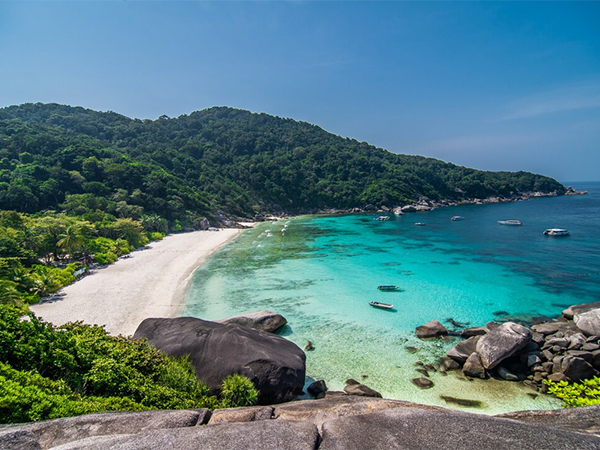
The Andaman Islands, nestled within the Bay of Bengal like emeralds on the blue, are among the finest tropical getaways in India. They offer turquoise lagoons, gentle white sands, and vibrant coral habitats that entice countless visitors every year.
Nevertheless, it is important to understand Andaman weather in advance of your travels, as experiences here will dramatically shift with the weather. The Andaman Islands will have a warm, tropical climate all year-round, but month to month, there will be significant variations in rainfall, humidity, and sea conditions.
Choosing the right travel season for the Andaman Islands can affect a variety of aspects of your trip, including your budget, your comfort, and what sorts of experiences you can enjoy while you are here.
More often than not, the best time to visit the Andaman Islands is during the dry season from October to May, when outdoor activities are at their best due to the climate being dry climate and the ocean is also calm.
Get to know Andaman’s tropical climate, its seasons, and how the weather shapes your island experience.
Geographical Setting
The Andaman and Nicobar Islands are located approximately 1200 km east of mainland India, and are surrounded by the Bay of Bengal. This geographical isolation results in a unique marine environment and climate that is fundamentally different from coastal India.
Climate Type
The islands have a tropical humid maritime climate that is influenced by the northeast and southwest monsoons. For most of the year, the islands have sunny weather, with tropical downpours interrupting them sporadically.
Average Temperature
The temperature in the Andaman Islands remains consistent throughout the year, usually ranging from 23 oC to 31 oC. The evenings are pleasantly warm in the cooler months, making this an ideal place for beach walks or eating al fresco.
Rainfall and Seasons
The Andamans experience their major rainfall between June and September, with intermittent showers expected before and after. The non-monsoon months, primarily October to May, are rather dry and are the preferred period for tour and marine activities.
In summary:
(Read More: Andaman Weather Guide)
You can categorize the year in Andaman into three intervals of interest, because each experience will be different.
Winter is the busiest time and probably the best time to visit Andaman. The daily temperatures will be between 24 and 28 degrees Celsius. There will not be much rain, and the seas will be calm. The islands will be at their best to offer stunning skies, bright beaches, and crystal clear waters to enjoy.
Highlights:
Pros: Excellent climatic conditions, colourful events and all tourist services are accessible
Cons: In general, accommodation will be more expensive, and there will be crowds at the popular places.
The months of summer are warm, sunny, and still good for travel. Temperatures will be in the range from 26°C to 31°C, and humidity levels will be on the rise. Since it’s summer, this is a great time for diving, snorkelling, and boating, with calm ocean conditions and good underwater visibility.
Reasons to Visit in the Summer:
Pros: Less expensive packages than in the winter; excellent underwater viewing
Cons: Some humidity and a chance of rain showers in the evenings
The Andaman monsoon brings rain and storms periodically. Ferry schedules may change depending on wind and sea conditions. But it is also when the islands become green and vibrant. It is a great time for anyone more inclined to relaxation and natural beauty than adventure sports.
Reasons to Visit During the Monsoon:
Pros: Travelling in a peaceful and budget-oriented manner
Cons: Less ferry trips and water activities
Here is a month-wise table of Andaman weather:

| Month | Avg. Temp (°C) | Weather Conditions | Travel Suitability |
| January | 24–28 | Cool, dry, ideal for all activities | Excellent |
| February | 25–29 | Pleasant and sunny | Excellent |
| March | 26–30 | Warm, calm seas | Great |
| April | 27–31 | Hot but perfect for diving | Good |
| May | 28–31 | Start of rains, less crowd | Fair |
| June–September | 25–30 | Heavy rain, humid | Avoid/Offbeat |
| October | 25–29 | Rain subsides, green landscapes | Great |
| November–December | 24–28 | Clear skies, festive mood | Excellent |
The Orkney Islands can be a destination for tourists with all different aspects of our travel justice, from deep-sea divers and honeymooners, to photographers, to backpackers. Each of these activities is optimal for some time of the year.

This is the best scuba diving season in the Andaman. The sea is flat, the visibility is up to 30m, and marine life is occurring in abundance. Diving and snorkelling conditions from Havelock’s Elephant Beach to Neil Island’s coral gardens are adequate during the aforementioned times.
Why is this time of year best?
Avoid the South West monsoon months, as many dive centres will be closed due to safety restrictions.
The period from November to April captures a dream beach atmosphere with sunny skies, mild humidity, and smooth seas. The famous beaches of Radhanagar, Kalapathar, and Corbyn’s Cove are perfect for swimming or simply lounging in the sun.
It’s also a great time to visit Ross Island, Cellular Jail, and the Limestone Caves since the ferries run often and the visibility is good.
The cool, dry months of the Andaman Islands are the most romantic. Couples can enjoy sunsets, beautiful accommodations, and intimate dinners under the stars. Havelock and Neil Islands also have resorts that arrange special honeymoon packages for couples.
Reasons why couples love this time frame:
If cost is a consideration for what you are looking for, nothing beats going off-season, June to September. At this time, hotels, cruises, and tours are reduced significantly. Yes, it may rain heavily, but the sound of the rain, the lack of tourists at that time, and the green surroundings for long, relaxing stays are compelling attributes to make this schedule worthwhile.
Reasons it is worthwhile:
Photographers will truly love the post-monsoon season. The forests, washed by the rain, look colourful while the skies are beautifully clear. This is a good time to shoot wildlife photography in Chidiya Tapu, sunrise photography in Kala Pathar, and landscape photography in Mount Harriet National Park.
Recommended for: Nature walk, Drone shots, sunrise/sunset images
(Also read: Scuba Diving in Andaman)
Numerous cultural and tourism-related functions occur throughout the year in the Andamans, where visitors can experience the local atmosphere.
The islands are stunning throughout the year, but post-summer, June to August, is indisputably the worst time to visit the Andaman if you are looking to experience activities and adventures.
Because of monsoonal downpours, strong winds and rough seas may impact ferry operations, however, flights are usually unaffected. Not to mention water sports and inter-island movement across the Apollo.
Furthermore, don’t be shocked if your flight(s) are delayed or rescheduled because of weather. Planning a trip with a group can be a true adventure when travelling between the islands, and you may consider getting cancellation insurance to cover if a change in weather occurs. Take into careful consideration about moving between different islands.
You may find it useful to do a little planning for your trip to Andaman:
(More insights: Andaman Travel Tips)
The peak of the dry and sunny season is between November and April, with favourable weather for any activity.
Yes. Although it may be at its humid level, May generally features good weather for both diving and sightseeing, without a large tourist crowd.
Yes, but you will find ferry service limited, and water sports are at a minimum. Travel is only recommended if you are looking for a peaceful and economical option.
The scuba diving season is generally observed from October to May, when the sea conditions are normally the safest.
Choosing the ideal season to go to Andaman is the first step to fully enjoying the wonders of this beautiful destination. From October to May, you can have it all: slight seas, beautiful blue skies, and the best diving conditions. This is the time of year when the islands are at their best for beach lovers, families and adventure travellers alike.
Travellers who want price and crowds to be manageable might prefer the March to May period. The islands will be hot but enjoyable. You can find no better sense of quiet and budget in the June-September Monsoon period when the Andaman emerges greener and far more quiet, with a great sense of solitude and a look of charm and beauty (all of which cannot be escaped, bearing witness in this region).
No matter when you arrive, the pristine waters, friendly locals, and immense tranquillity are sure to captivate you. Start planning your ideal Andaman vacation now and truly experience why Andaman is one of the world’s best tropical travel destinations in the history of tourist travel in India.